You've probably learned that reds, oranges and yellows are warm colors, while greens, blues and violets are cool colors.
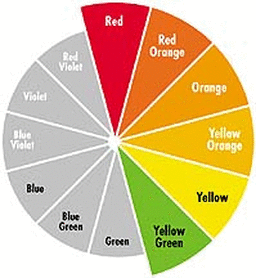 Warm colors? |
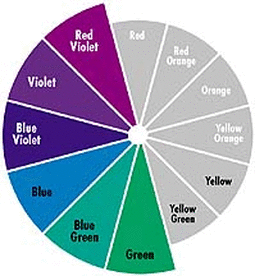 Cool colors? |
Yet you find versions of all of these colors in every seasonal
color palette, including those seasons that are totally warm or totally cool.
True (Warm) Spring and True (Warm) Autumn have colors that one might call green, blue or violet; True (Cool) Winter and True (Cool) Summer have colors that one might call red, orange or yellow.
How can this be?
Let's first understand that there is no universally agreed-upon, exact warmest or coolest color. There is, though, a general consensus around approximately where "warmest" and "coolest" are found. Artists and theorists tend to agree that the warmest color is somewhere in the red-orange-yellow range, and the coolest color is somewhere in the green-blue-purple range.
Some will say that blue is the coolest color, and its opposite, orange, is the warmest.
True (Warm) Spring and True (Warm) Autumn have colors that one might call green, blue or violet; True (Cool) Winter and True (Cool) Summer have colors that one might call red, orange or yellow.
How can this be?
Let's first understand that there is no universally agreed-upon, exact warmest or coolest color. There is, though, a general consensus around approximately where "warmest" and "coolest" are found. Artists and theorists tend to agree that the warmest color is somewhere in the red-orange-yellow range, and the coolest color is somewhere in the green-blue-purple range.
Some will say that blue is the coolest color, and its opposite, orange, is the warmest.
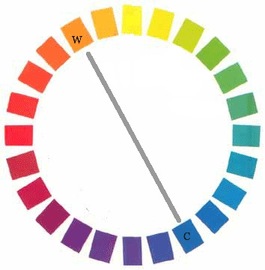
Others feel that yellow is the warmest color, which would make purple
the coolest.
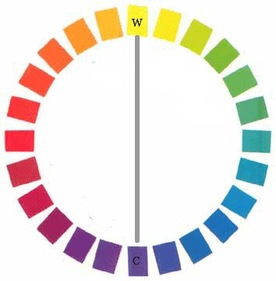
Still others might find a reddish-orange the warmest color, making a
greenish-blue the coolest color. Whatever; I'm comfortable with this ambiguity. I haven't discovered an objective way to determine warmth and coolness, so
I'm content to have an approximate idea of where "warmest" and "coolest"
are found.
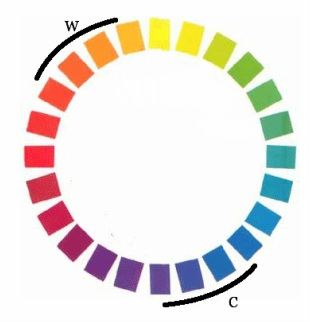
But it can't be true that all the colors on the red-orange-yellow side of the wheel are warm, and all the colors on the green-blue-purple side of the wheel are cool... right? We know that True (Warm) Autumn has greens and blues, and True (Cool) Winter has reds and yellows.
So what's the deal?
So what's the deal?
The answer lies in this fact: no matter what hue we're talking about, temperature is relative.
Think about it. You might call red a warm color. But some reds are warmer than others, right? Scarlet red is warmer than crimson, which is warmer than raspberry.
Think about it. You might call red a warm color. But some reds are warmer than others, right? Scarlet red is warmer than crimson, which is warmer than raspberry.

How do we know this?
The best explanation I've found for how our brains decide whether one color is warmer than another is this:
We determine it by (unconsciously) deciding which is closer to the warmest color on our mental color wheel.
Let's call orange the warmest color, just for the sake of argument.
Of the three reds I mentioned, scarlet is physically closest to orange. Crimson is less close. Raspberry is even farther away.
The best explanation I've found for how our brains decide whether one color is warmer than another is this:
We determine it by (unconsciously) deciding which is closer to the warmest color on our mental color wheel.
Let's call orange the warmest color, just for the sake of argument.
Of the three reds I mentioned, scarlet is physically closest to orange. Crimson is less close. Raspberry is even farther away.
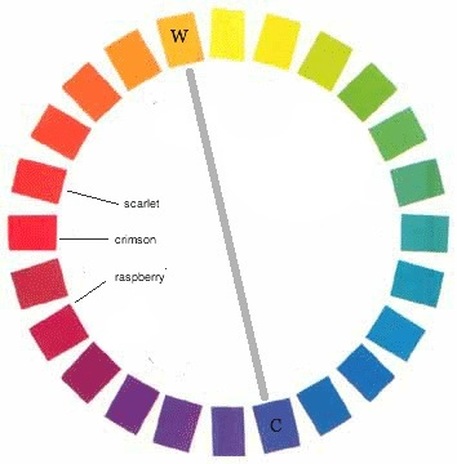
So within the category "red," we find both warm(er) and cool(er)
reds. The warmer reds appear in the books of the warmer seasons; the
cooler reds appear in the books of the cooler seasons.
Consider green.
Is grass green a cool color? Not as cool as jade green, right? But cooler than yellow-green, surely.
Consider green.
Is grass green a cool color? Not as cool as jade green, right? But cooler than yellow-green, surely.
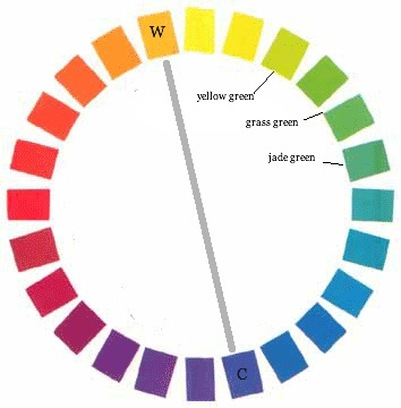
The same principle is in effect. Jade green is closest to blue, the "cool pole" on our mental color wheel. Grass green is a little farther away. Yellow-green is farther still.
The bottom line:
"Warm and cool" is not a continuous spectrum from one side of the color wheel to the other.
"Warm and cool" is a spectrum within each hue.
In the picture above, if we started at yellow and labeled the colors clockwise, we'd have
warm yellows
cool yellows
warm greens
cool greens
Somewhere in the range of the blues, we pass the coolest color. Then the order switches as we continue clockwise:
cool purples
warm purples
cool reds
warm reds
And then we're back to our warmest color.
There are several good web pages that talk about all of this in greater detail, but I haven't seen one I like more than the article "Color Temperature" on www.handprint.com. I owe much of my understanding of how warm and cool work to this article.
P.S. Muted cool colors are less cool than clear cool colors, and muted warm colors are less warm than clear warm colors. Can you guess why? Recall that to mute a color, we add its opposite color. For example, to mute a purple, we add yellow. By doing so, we draw it closer across the color wheel to the warmest color on the wheel. So since it's closer, it's warmer. Neat, huh?
The bottom line:
"Warm and cool" is not a continuous spectrum from one side of the color wheel to the other.
"Warm and cool" is a spectrum within each hue.
In the picture above, if we started at yellow and labeled the colors clockwise, we'd have
warm yellows
cool yellows
warm greens
cool greens
Somewhere in the range of the blues, we pass the coolest color. Then the order switches as we continue clockwise:
cool purples
warm purples
cool reds
warm reds
And then we're back to our warmest color.
There are several good web pages that talk about all of this in greater detail, but I haven't seen one I like more than the article "Color Temperature" on www.handprint.com. I owe much of my understanding of how warm and cool work to this article.
P.S. Muted cool colors are less cool than clear cool colors, and muted warm colors are less warm than clear warm colors. Can you guess why? Recall that to mute a color, we add its opposite color. For example, to mute a purple, we add yellow. By doing so, we draw it closer across the color wheel to the warmest color on the wheel. So since it's closer, it's warmer. Neat, huh?
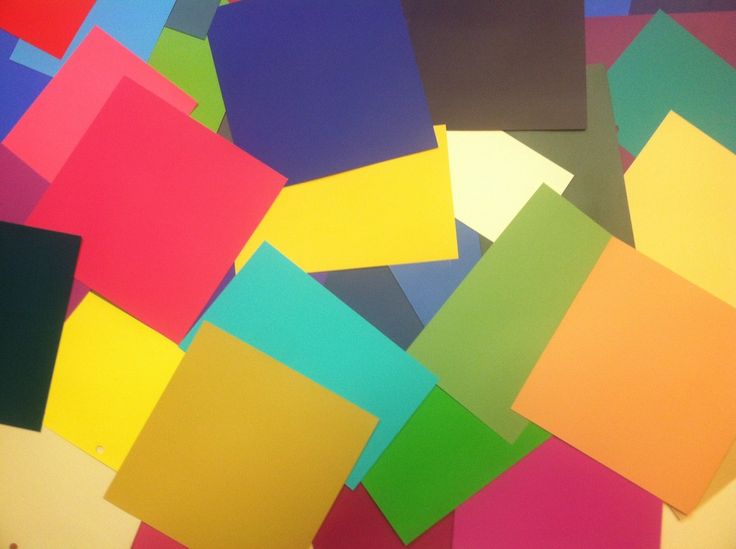
COMING SOON - Home Draping Option 2: Any Six SeasonsDrape yourself at home! A red or pink, a yellow or gold, a green or blue-green, and a blue or violet from six seasons of your choice. Each cardstock sheet is at least 4 x 8 inches. Let me know which six seasons you'd like in a note at checkout. "I received my color cards and I absolutely love them! I was a little unsure about my coloring but seeing the cards, now I'm confident that I picked the right season." ** Unfortunately, shipping outside of the U.S. and Canada is currently not available.** |
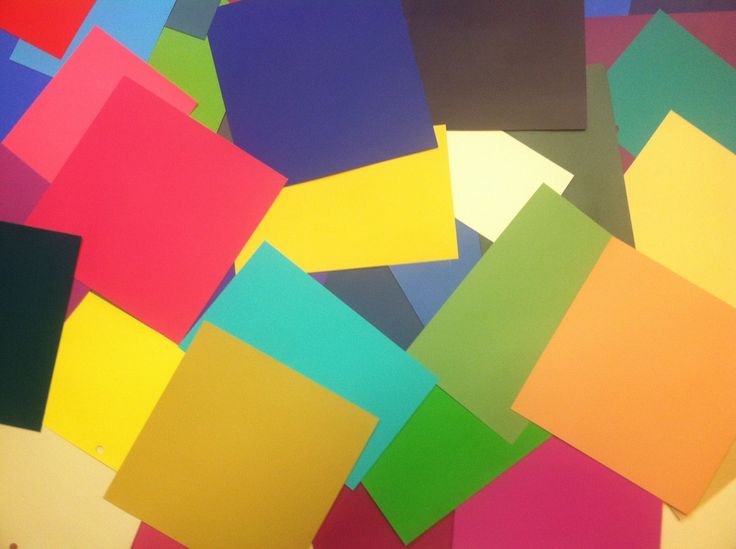
COMING SOON - Home Draping Option 1: 12-Season Color Card SetDrape yourself at home! 48 cards in total:
from each of the 12 seasons. Each cardstock sheet is at least 4 x 8 inches. "I received my color cards and I absolutely love them! I was a little unsure about my coloring but seeing the cards, now I'm confident that I picked the right season." ** Unfortunately, shipping outside of the U.S. and Canada is currently not available.** |